Beginner guides Guide 4 of 14
How to read the card
The card looks like code until you know four conventions. After that, every line reads as a picture of fourteen tiles.
One line is one hand
Each line on the card describes 14 tiles as a row of groups. A digit is a tile number, and how many times it repeats is the size of the group. So 222 is a pung of 2s and 4444 is a kong of 4s. Letters stand for the tiles without numbers.
| F | Flower |
| N E W S | North, East, West, South |
| D | Dragon |
| 0 | The soap (white dragon) used as a zero |
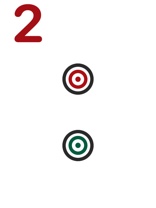
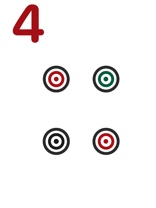
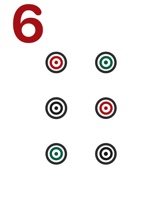
A line that reads FF 2222 4444 6666 means this:
Colors mean suits, but not which suits
On a printed card the groups are in one, two, or three colors. One color means every numbered group is in the same suit. Two colors means two different suits. Three colors means all three. The colors never tell you which suit to use. That choice is yours, so the hand above could just as well be bams or craks.
X and C
Each hand is marked X or C. X is for exposed: you may call discards to build it. C is for concealed: you must draw every tile yourself, and the only discard you may take is the one that completes the hand.
The number at the end
That is the hand's value. Harder hands are worth more. See scoring and paying for what happens with it.
The families
Hands are grouped into about ten families. The names and the mix change a little from year to year. These are the ones you will meet most often.
| Year | Built from the digits of the current year, with the soap as zero. |
| 2468 | Even numbers. |
| 13579 | Odd numbers. |
| 369 | Threes, sixes, and nines. |
| Like numbers | The same number in all three suits. |
| Consecutive run | Numbers in a row. |
| Addition | Small sums, such as 3 + 6 = 9. |
| Quints | Hands with five of a kind, which need jokers. |
| Winds and dragons | Mostly the tiles without numbers. |
| Singles and pairs | No group bigger than two, so no jokers. Always concealed. |
The shortcut
Most hands are not random. They are pungs, kongs, and pairs of just a few numbers picked by a rule. Even hands use 2, 4, 6, 8. A 369 hand uses 3, 6, 9. Learn the rule for a family and every hand in it reads at a glance.
About your own card
Cards are published each year by organizations such as the National Mah Jongg League, and their hands belong to them. Mahjong Ready uses its own training card with original hands in these same families. The hands differ. The way of reading them is the same.