Beginner guides Guide 12 of 14
Reading the table
Exposures and discards tell you what the other players are building. Use them to choose safer tiles to throw.
Everything face-up is information
You can see every tile that has been discarded and every group that has been exposed. A beginner looks only at their own rack. The next step is to spend a moment on the middle of the table each turn.
What an exposure tells you
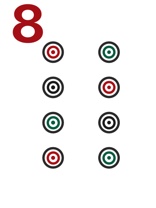
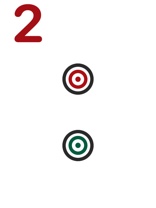
A pung of 8 dots and a kong of 2 dots. This player is probably on an even hand in dots, and still needs 4s and 6s. Holding those tiles back costs you little and may cost them the game.
One exposure narrows the possibilities. Two usually point to a few lines on the card. Look them up. It is allowed, and good players do it.
What a discard tells you
A player throws what they do not need. Someone who keeps discarding craks is probably not building in craks. Someone throwing winds and dragons early is headed for a number hand.
Count to four
There are four copies of each tile. If three 7 bams are already on the table, nobody can call the fourth for a pung without a joker, and it is close to a safe discard. If none have appeared late in the game, somebody is holding them.
Safer discards
- The tile just thrown. If nobody called it a moment ago, it is unlikely anyone wants it now.
- A tile with most of its copies showing.
- A joker. A discarded joker can never be called. It is a costly way to be safe, but late in a game it is sometimes the right one.
Riskier discards
- A tile that fits someone's exposures and has not been seen yet.
- Anything new, late. With few tiles left in the wall, a tile nobody has discarded all game is the one to worry about.
Knowing when your hand is over
If the wall is nearly gone and you are still several tiles away, stop trying to win and start choosing the safest tile each turn. A wall game, where nobody wins, costs you nothing. Throwing the winning tile costs you the most of anyone at the table.